The bridal bouquet is far more than a simple accessory; it symbolises love and elegance at the wedding. Choosing the ideal bouquet requires attention to trends, types of flowers and harmony with the event's floral decoration, as well as the seasons.
The different types of bridal bouquets
Round bouquet
Classic and timeless, the round bouquet is composed of flowers arranged symmetrically, offering an elegant, polished appearance.
Cascade bouquet
The cascade bouquet is characterised by flowers that fall in a cascade, creating a romantic and sophisticated effect.
Asymmetrical bouquet
On-trend in 2025, the asymmetrical bouquet offers a natural, modern look, often inspired by wild gardens.
Fresh or dried flowers… which type of flowers to choose?
When choosing your bridal bouquet, the hesitation between fresh flowers and dried flowers is common. These two options bring charm and elegance, but differ in terms of maintenance, durability and aesthetic finish. Here is a guide to help you make the ideal choice depending on your expectations and the style of your wedding.
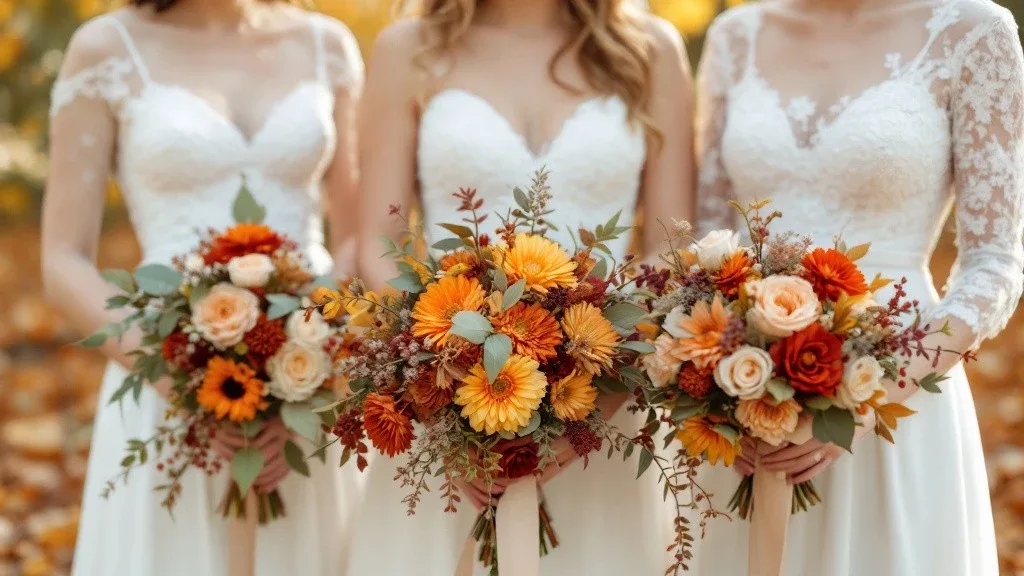
The ephemeral beauty of fresh flowers
The fresh flowers captivate with their enchanting fragrance and natural radiance. They bring a touch of unique vitality and freshness to the bouquet. However, their lifespan is limited:
- Durability: Fresh flowers generally last one to two days after the bouquet is made.
- Maintenance: They need to be placed in damp floral foam or water-filled vials to stay hydrated and preserve their radiance until the ceremony.
- Sensitivity: Fresh flowers are more sensitive to high temperatures and to lack of water, at risk of wilting quickly, especially at summer weddings.
Popular fresh flowers for a bridal bouquet
- Roses – Classic and timeless, roses are synonymous with love and come in a wide palette of colours.
- Peonies – Highly prized for their generous volume and delicate fragrance, they bring a romantic touch.
- Ranunculus – Similar to peonies but smaller, they add a refined texture to the bouquet.
- Lilies – Elegant and sophisticated, they symbolise purity and beauty.
- Orchids – Modern and exotic, they bring a unique, delicate dimension.
- Hydrangeas – Their generous volume allows for imposing, luxurious bouquets.
- Freesias – Fragrant and colourful, they are perfect for a light, natural touch.
- Carnations – Long underestimated, they are making a strong return for their longevity and many colours.
- Tulips – Fresh and elegant, they are ideal for spring weddings.
- Fresh lavender – Perfect for a country bouquet, it brings a soothing fragrance.
The timeless quality of dried flowers
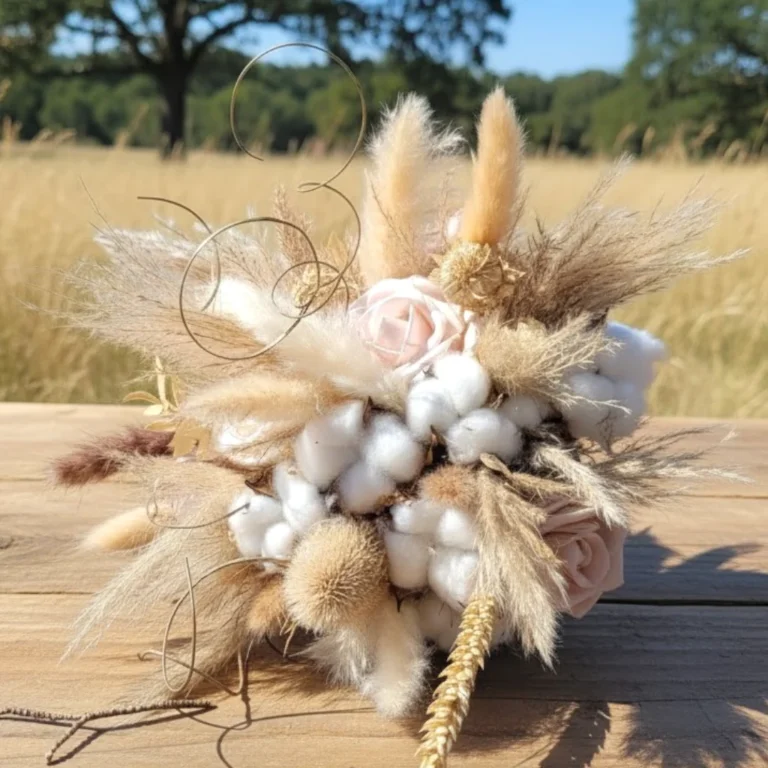
- The dried flowers, on the other hand, are loved for their durable, bohemian side. They are gaining ground at weddings for their delicate aesthetic and practicality.
- Resistance: Less fragile in the face of heat or climate variations, they keep their shape and colour long after the event.
- Durability: Dried flowers can last several months, even years if they are well preserved.
- Maintenance: They require no water and stay intact without any special care, making them perfect for outdoor weddings or extended ceremonies.
Popular dried flowers for a bridal bouquet
- Lavender – A must for its lasting fragrance and rustic style.
- Statice (Limonium) – Colourful and resistant, it holds its shade well after drying.
- Strawflowers (Helichrysum) – Symbols of eternity, they add texture and colour.
- Wheat and grasses – Perfect for a country wedding or bohemian.
- Pampas (Pampas grass) – Very on-trend, it adds volume and a wild touch to the bouquet.
- Gypsophila (Baby's breath) – Used both fresh and dried, it offers an airy texture.
- Ruscus – Its delicate foliage remains intact after drying.
- Eucalyptus – In addition to its fragrance, its leaves keep a beautiful shape.
- Yarrow – Its dried flowers retain a vibrant colour.
- Amaranth – Its trailing silhouette is perfect for a cascading effect.
Tips for combining fresh and dried flowers
For a bouquet unique and modern, you can mix fresh flowers with dried elements. For example:
- Combine fresh peonies and dried lavender.
- Mix fresh roses with dried eucalyptus leaves.
- Create contrast by including dried wheat stalks to fresh ranunculus.
This combination brings depth, texture and improved durability to your bouquet, blending the ephemeral and the timeless.
Choosing the ideal flowers for each season
The seasonality is a key factor in choosing your bridal bouquet. Opting for seasonal flowers not only guarantees their freshness and radiance, but also takes advantage of more favourable costs. Each season offers a palette of unique flowers suited to different wedding styles. Here is a guide to help you choose the perfect flowers according to the time of your wedding.
Spring: freshness and natural radiance
Spring is the ideal season for an abundant, colourful bouquet. The flowers of this period are often voluminous and fragrant, symbolising rebirth and flourishing love.
Popular spring flowers:
- Peonies – Plump and delicate, perfect for a romantic bouquet.
- Tulips – Simple and elegant, they add a touch of lightness.
- Ranunculus – Small but voluminous, they add texture.
- Lily of the valley – Fresh and symbolic, ideal for a delicate touch.
- Hyacinth – Fragrant and colourful, it lights up a bridal bouquet.
Opt for round bouquets and generous ones, playing with pastel shades (white, pale pink, lilac). These bouquets are perfect for a country or romantic wedding.
Summer: radiance and heat resistance
Summer weddings call for heat-resistant flowers to prevent them from wilting quickly. It is also the season of vivid colours and bold compositions.
Popular summer flowers:
- Sunflowers – Bright and rustic, perfect for an outdoor ceremony.
- Roses – Timeless and available in a wide range of colours.
- Lavender – Brings a Provençal note and a soothing fragrance.
- Dahlia – Voluminous and structured, it gives character to the bouquet.
- Freesia – Light and colourful, it copes well with high temperatures.
A asymmetrical bouquet with touches of greenery and dried flowers such as wheat sheaves or grasses can be an excellent option for bohemian or rustic weddings.
Autumn: warmth and deep colours
Autumn is synonymous with warm tones and natural-style bouquets. This season lets you play with rich colours and varied textures.
Popular autumn flowers:
- Chrysanthemums – Perfect for adding volume and autumn colours.
- Dahlia – Still present in early autumn for a structured bouquet.
- Red and orange roses – Bring an elegant, passionate touch.
- Hydrangeas – Available until the end of summer, they retain autumn colours.
- Amaranth – With its trailing stems, it is ideal for a cascading effect.
Opt for cascade bouquets in warm tones such as red, orange and burgundy, accented with golden foliage and grasses.
Winter: elegance and restraint
Winter weddings are often marked by sophisticated, restrained bouquets. Fewer flowers are available in peak season, but some winter varieties remain magnificent.
Popular winter flowers:
- Amaryllis – Perfect for an elegant, imposing bouquet.
- Anemones – Delicate and refined, they offer striking contrasts.
- White rose – Classic and timeless, a symbol of purity.
- Gypsophila – Light and airy, ideal for a snowy effect.
- Hellebore (Christmas rose) – The winter flower par excellence, discreet and elegant.
The round bouquets with white, cream and silver tones harmonise perfectly with the winter atmosphere. Include fir branches, ruscus or eucalyptus to accentuate the season.
Why choose seasonal flowers?
- Seasonal availability: As you know, some flowers are only available at specific times of the year, according to their natural flowering cycle.
- Guaranteed freshness: Seasonal flowers are sturdier and hold their radiance better on the wedding day.
- Reduced cost: Flowers available in abundance are generally less expensive than off-season varieties.
- Natural aesthetic: They fit perfectly with the environment and the wedding theme.
Depending on the season of your wedding, the choice of seasonal flowers not only guarantees the freshness and beauty of the bouquet, but also harmony with the rest of the floral décor.
On-trend colours for bouquets in 2025
Bold, vibrant palettes
The vibrant colours such as bright orange, deep red or deep purple are on trend, bringing a dynamic touch to bouquets.
Reimagined pastel tones
The pastel tones remain popular, but with more saturated nuances, offering a modernised softness.
Coordinating the bouquet with the floral décor
Colour coherence
Make sure the colour code of the bouquet matches the rest of the floral décor, including the centrepieces and the arches.
Types of floral decoration
- Floral arches : Perfect for the ceremony, they frame the newlyweds with elegance.
- Floral centrepieces : They bring a touch of freshness to the reception.
- Chair decorations : Flowers attached to the chair backs add a romantic note.
Matching the bouquet to the dress
The the style of the bouquet should complement the wedding dress in terms of size, shape and colour.
Personalise to your taste
Include personal elements or flowers that hold a special meaning for you.
FAQ on the bridal bouquet
The fresh flower bouquet stands out for its ephemeral beauty, natural fragrance and immediate radiance, but it generally only lastsone to two days after the ceremony. In contrast, a dried flower bouquet is long-lasting and can be kept for several months or even years, without requiring any particular care.
To keep the flowers fresh, it is recommended to place them in damp floral foam or water-filled vials. Keep the bouquet in a cool place until the moment of the ceremony and avoid prolonged exposure to sun or high temperatures.
The must-have fresh flowers for a bridal bouquet are:
Roses – Symbols of timeless love.
Peonies – Romantic and voluminous.
Ranunculus – Elegant and delicate.
Orchids – Modern and sophisticated.
Hydrangeas – Luxurious and generous.
The dried flowers are ideal for their durability and their ability to retain their shape and colour without needing water. They are perfect for country, bohemian or vintage weddings, and can also be reused after the ceremony as interior décor.
Among the most sought-after dried flowers, you'll find:
Lavender – Sweet, rustic fragrance.
Strawflowers – Retain their vibrant colour.
Gypsophila – Light and airy.
Pampas grass – Perfect for adding volume.
Wheat and grasses – Bring a country touch.
Yes, combining fresh and dried flowers lets you create an original bouquet, playing with textures and volumes. For example, pairing fresh peonies with dried lavender or fresh roses with dried eucalyptus leaves gives a result that is both elegant and lasting.
The cost depends on the varieties of flowers chosen. In general, a fresh flower bouquet is more expensive due to the fragility of the flowers and the conservation work required. The dried flowers, although sometimes more expensive to buy, are often made worthwhile by their longevity.
Yes, the bouquet of dried flowers suits every season, as it does not depend on seasonal flowering. It is perfect for autumn and winter weddings, when certain fresh flowers are harder to find.
The fresh flowers can suit an outdoor wedding, but they require special attention. In summer, favour heat-resistant flowers such as roses, carnations or orchids. Make sure the bouquet stays hydrated until the ceremony.
To preserve a fresh flower bouquet, you can:
Dry it by hanging it upside down in a dry, dark place.
Use the glycerine technique to set the colours and extend the lifespan of the flowers.
Press it to create a framed decoration as a wedding keepsake.
To conclude on the importance of choosing the bridal bouquet
The bridal bouquet is a central element of the wedding, reflecting your personality and the theme of your special day. By following this advice and staying attentive to 2025 trends, you'll be sure to make the perfect choice for a harmonious and memorable wedding.
Request a free quote for your bridal bouquet and receive personalised advice for floral décor in perfect harmony with your event.