What is a humanist ceremony officiant?
A humanist ceremony officiant is the person who presides over a wedding ceremony with no religious connotation. Their role is to lead and personalise the union of the newlyweds, creating an atmosphere that reflects their values and their love story.
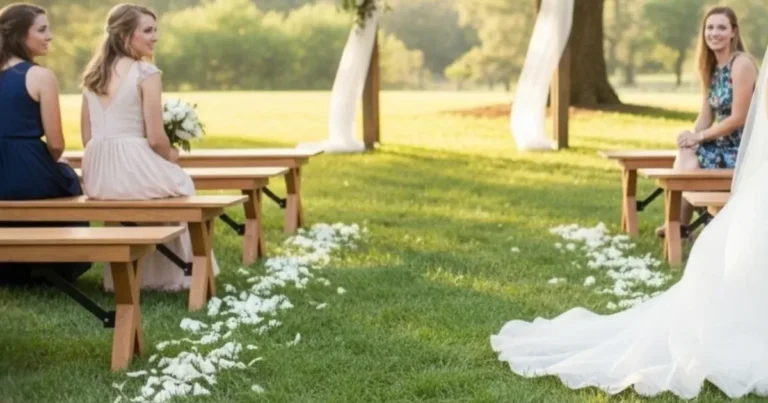
The humanist ceremony allows great freedom in celebrating the wedding, letting couples choose the texts, music and rituals that reflect them. Unlike a religious or civil ceremony, it is entirely personalised — from the choice of rituals to the floral aisle decoration that will guide the newlyweds' entrance.
Why choose a humanist ceremony?
The secular ceremony is ideal for couples who wish to celebrate their love in a unique, intimate way. It is often chosen for its flexibility and the possibility of including symbolic, personal elements.
It is perfectly suited to mixed-faith weddings or couples wishing to mark their commitment in a non-conventional way. It is an alternative that reflects the couple's story and values without falling within a religious framework.
How to choose your humanist ceremony officiant?
Experience and professionalism
It is essential to select an experienced officiant who can guide you through the creation of your ceremony. A professional has the skills needed to manage every step of the process, from drafting the speech to running the event.
Personality and compatibility
Make sure the officiant shares your vision of the wedding. A good rapport is essential to ensure an authentic ceremony true to your expectations. Take the time to meet several officiants before making your choice.
Availability and location
The officiant must be available on your wedding date and willing to travel to the area in question. If you are getting married in the Var, the Bouches-du-Rhône or the Alpes-Maritimes, favour an humanist ceremony officiant officiant based in these departments to limit travel costs.
Essential questions to ask your officiant
- What is your experience as a humanist ceremony officiant?
- How do you personalise the ceremonies?
- What types of rituals do you offer?
- Do you integrate the contributions of loved ones into the ceremony?
- What are your rates and which services are included?
What you can expect from your officiant
A professional officiant supports you at every stage of the planning. They help you structure your ceremony, draft your vows and prepare the loved ones' contributions. They also coordinate the ceremony on the day, ensuring everything runs smoothly.
The officiant can offer symbolic rituals suited to your wishes. They will play a key role in the emotion and the flow of the moment.
They can also provide the sound system and help your guests find their seats, ensuring a smooth, harmonious ceremony.
The flow of the humanist ceremony
Welcoming the guests
The officiant opens the ceremony by welcoming the guests and introducing the newlyweds. This moment sets the tone for the event and introduces the various stages to come.
Exchange of vows and rings
The newlyweds pronounce their personalised vows and proceed to exchange the rings. The officiant can guide them and help them draft their promises if necessary.
Symbolic rituals
Including symbolic rituals brings a personal, emotional touch to the ceremony. Here are a few examples:
- Sand ritual: Each spouse pours sand of a different colour into a container, symbolising their union.
- Candle ritual: The newlyweds light a central candle together after each lighting a separate candle.
- Wishing tree: Guests hang their wishes on a decorative tree.
- Stone circle: Guests form a circle of stones around the newlyweds to symbolise their support.
- Discover our complete article on the different types of humanist ceremony rituals
Contributions from loved ones
Loved ones may be invited to read texts, poems or share anecdotes. This makes the ceremony more lively and intimate.
Organisation, venue and decoration of the ceremony
Choice of venue
The secular ceremony can take place anywhere:
- At a wine estate
- On a beach
- In a private garden
- In open countryside
The choice of venue depends on the wedding theme and your personal preferences.
Decoration
Decoration is a key element to create a unique atmosphere. Here are a few ideas:
- Ceremony arch floral or minimalist
- Lectern for the officiant
- Aisle runner to mark the newlyweds' entrance
- Lanterns and candles for a romantic touch
- Seasonal flowers to beautify the space
List of accessories needed for a humanist ceremony
Here are the essentials for a successful ceremony:
- Ceremony arch
- Lectern
- Decorated chairs
- Ceremony aisle runner
- Ring bearer
- Candles or lanterns
- Table for the rituals
- Sound system
- Guestbook
Example of a humanist ceremony officiant's speech
*"Dear [newlyweds' first names], dear guests,
Today, we are gathered to celebrate the love that unites [newlyweds' first names]. Their story is made of meetings, laughter and promises. Together, they have chosen to commit to each other and to seal this union before you, witnesses of this sincere love…"*
FAQ on the humanist ceremony officiant
The humanist ceremony has no religious connotation and is entirely personalisable.
No, only the civil ceremony at the town hall has legal value.
Rates vary between €500 and €1,500 depending on the experience and the services.
Yes, the ceremony is adaptable to your wishes.
Around 30 to 60 minutes.