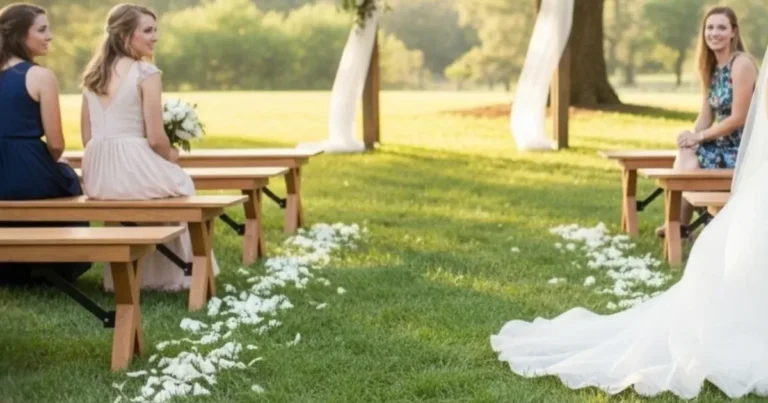
What is a humanist wedding?
A humanist wedding is a wedding ceremony with no religious connotation, often chosen by couples who wish to celebrate their union freely, according to their own values and convictions. Unlike a religious wedding, it is personalised and tailored to the story and wishes of the future spouses.
For the Hebrew tradition, discover our dedicated guide to the Jewish wedding and the ceremony beneath the chuppah.
More and more couples in France, religious or not, are turning to this alternative to create a ceremony that reflects them.
What is a religious wedding?
A religious wedding is a ceremony organised in a spiritual setting according to the couple's beliefs. It is generally officiated by a religious authority and follows specific rites for each faith (Catholic mass, Muslim nikkah, etc.).
The religious wedding is usually seen as a spiritual step, complementing the civil wedding, which remains legally mandatory in France.
Differences between humanist and religious weddings 📐
Setting and officiant
- Religious wedding: Led by a spiritual authority (priest, imam, rabbi…).
- Humanist wedding: Officiated by a loved one or a professional chosen by the couple.
Personalisation
- Religious wedding: Follows a structured programme with set texts and prayers.
- Humanist wedding: Fully personalisable (speeches, rituals, music, venues…).
Place of celebration
- Religious wedding: Held in a place of worship (church, synagogue, mosque…).
- Humanist wedding: Can take place anywhere (beach, forest, reception hall…).
Symbolism and commitment
- Religious wedding: The commitment is often spiritual and tied to the couple's faith.
- Humanist wedding: Symbolises love and mutual commitment without a religious dimension.
How a humanist ceremony unfolds
Theceremony officiant plays a key role in the success of a humanist wedding. Whether a loved one of the couple or a professional, they guide the ceremony with emotion and authenticity. If you'd like to learn more, see our dedicated article on the ceremony officiant. The humanist ceremony can include the exchange of vows, the participation of a ceremony officiant (close friend or professional) and symbolic rituals.
Here is an example of the programme:
- Entrance of the newlyweds
- Officiant's address
- Testimonials and readings
- Symbolic rituals (sand, candles)
- Exchange of rings and vows
- Closing and celebration
How a religious wedding unfolds
Each religion has its own rites, but here is a typical programme for a Christian religious wedding:
- Entrance of the newlyweds
- Readings and prayers
- Exchange of consent and rings
- Blessing and final prayers
- Exit of the newlyweds amid the guests' congratulations
Frequently Asked Questions (FAQ) 💭
No, only the civil wedding held at the town hall is recognised by law. The humanist ceremony is purely symbolic.
No, the religious wedding must be preceded by a civil wedding to have legal value.
A professional officiant or a loved one of the couple can lead the ceremony.
Yes, the choice of venue is free.
Prices vary depending on the officiant, the venue and the options chosen. On average, count on between €500 and €2,000.
Plan your wedding starting today 🚀
Plan the ceremony of your dreams 💍